.png)
Most Surreal Places in Mexico: How Tour Operators Can Build Trips Around the Unreal

There is a story that Salvador Dalí once refused to visit Mexico because he said he could not go to a country more surreal than his own work.
Whether he really said it or not almost does not matter.
Because the line lands.
Some parts of Mexico genuinely feel like reality has been slightly adjusted.
Places like Las Pozas do not try to make sense. Concrete staircases grow out of the jungle like a dream you forgot how to explain. Cueva de los Cristales looks completely impossible, yet it is natural. Isla de las Muñecas feels like folklore turned physical. Parque Quetzalcóatl and Casa Orgánica-style architecture feel designed to bend perception.
None of these places are trying to be surreal.
That is the point.
They just are.
For travel operators, this matters because the most surreal places in Mexico offer something most standard itineraries lack:
a reason to remember the trip.
Not another beach. Not another colonial plaza. Not another “must-see” stop.
A feeling.
And in today’s market, feeling is the product.
Why Surreal Places in Mexico Matter for Travel Operators
Most Mexico itineraries still follow the same pattern:
Cancún. Tulum. Chichén Itzá. Maybe Bacalar. Maybe Mexico City.
There is nothing wrong with famous places. They sell because people recognize them.
But recognition alone does not create differentiation.
The most surreal places in Mexico can help tour operators build routes around:
visual impact
emotional contrast
storytelling
photography
mystery
architecture
nature that feels unreal
“I had no idea this existed” moments
These places are especially useful for:
premium small-group trips
photography tours
cultural design itineraries
honeymoon or couple routes
creative retreats
Mexico City extensions
alternative Yucatán products
adventure and expedition-style trips
The key is not to throw them randomly into an itinerary.
The key is to use them as story anchors.
1. Las Pozas, Xilitla — Edward James’ Jungle Dream
Where: Xilitla, San Luis Potosí
Best for: surrealism, art, jungle, architecture, photography
Las Pozas is probably the most obvious starting point.
British poet and art patron Edward James created a surrealist sculpture garden in the rainforest of Xilitla. The site includes staircases that lead nowhere, concrete flowers, towers, pools, platforms, and structures that seem to have grown out of the jungle rather than been built.
It feels less like a tourist attraction and more like walking through someone’s unconscious mind.
How to get there
The easiest route is usually:
Fly to Mexico City, Querétaro, San Luis Potosí, or Tampico
Continue by road to Xilitla
Expect a long transfer, depending on your starting point
From Mexico City, this is not a casual day trip. It is better treated as part of a Huasteca Potosina route.
What it means for tour operators
Las Pozas should not be sold as a standalone “garden visit.”
It works best as part of a 4–6 day route including:
Xilitla
waterfalls in Huasteca Potosina
cave systems
jungle rivers
local food
small-town stays
When to include it
Use Las Pozas for travelers who want:
art and nature combined
something visually unforgettable
a route beyond standard Mexico
an alternative to beach-heavy itineraries
2. Cueva de los Cristales, Naica — The Place You Probably Cannot Visit
Where: Naica, Chihuahua
Best for: storytelling, science, geology, “unreachable wonder.”
This is one of the most surreal places in Mexico — and one of the most misunderstood.
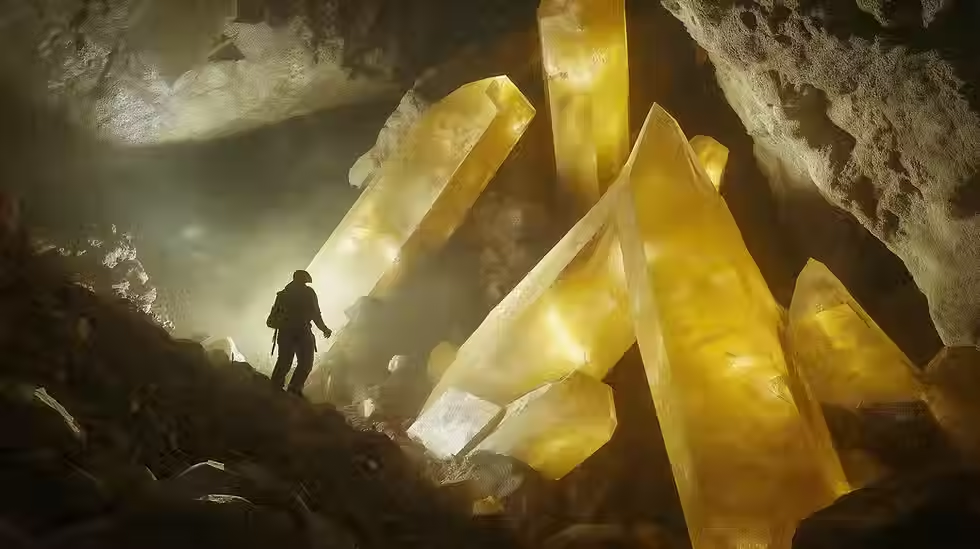
The Cave of Crystals in Naica contains giant selenite crystals, some of the largest ever found. The cave looks like a science-fiction cathedral, but the environment is brutally hostile: extreme heat, extreme humidity, and dangerous conditions.
Can tourists visit?
No.
Not realistically.
The cave is currently inaccessible to the public. It was connected to the Naica Mine, and after mining operations changed, the cave was allowed to flood again. Even when accessible, conditions were dangerous and suitable only for properly equipped researchers.
How to use it in an itinerary
Do not sell this as a visit.
Use it as a storytelling reference.
For example:
geology-themed Mexico content
Chihuahua or northern Mexico science routes
educational travel programs
“Mexico’s impossible landscapes” blog or webinar material
What it means for tour operators
This is important: not every surreal place needs to be visitable to be valuable.
Some places build imagination.
But be very clear with clients:
Cueva de los Cristales is not a tourist attraction.
It is a natural wonder to discuss, not package.
3. Dunas de Pacula — Hidalgo’s Mini Desert Illusion
Where: Pacula, Hidalgo
Best for: desert photography, offbeat road trips, hidden Mexico
Dunas de Pacula feels strange because it appears almost unexpectedly.
A desert-like landscape in Hidalgo, with soft sand formations and dry, cinematic scenery, it feels like a small piece of northern Mexico dropped into the mountains.
It is not as famous as Samalayuca or Cuatro Ciénegas, and that is exactly why it is interesting.
How to get there
The practical route is by road.
Usually:
Start from Mexico City
Drive toward Hidalgo
Combine with Zimapán, grutas, viewpoints, or Pueblo Mágico stops
This is best done with private transport.

What it means for tour operators
Dunas de Pacula works well as a visual surprise stop in a central Mexico itinerary.
It is not strong enough to anchor a full route alone, but it can elevate a road trip by adding contrast.
When to include it
Great for:
photography groups
soft adventure clients
offbeat Mexico routes
travelers who enjoy landscapes more than museums
4. Cuatro Ciénegas — The Desert That Thinks It Is Another Planet
Where: Coahuila
Best for: desert, science, biology, conservation, photography
Cuatro Ciénegas is one of the strangest landscapes in Mexico.
In the middle of the Coahuila desert, you find white dunes, turquoise pools, wetlands, endemic species, and stromatolite-like microbial life connected to some of the earliest life forms on Earth.
It is often described as one of Mexico’s most important ecological zones.
It feels prehistoric, desert-like, aquatic, and alien at the same time.

How to get there
The usual access points are:
Monterrey
Torreón
Saltillo
Monclova
From there, continue by road to Cuatro Ciénegas.
This is not a classic first-time Mexico route. It requires intentional planning.
What it means for tour operators
Cuatro Ciénegas is ideal for:
science-focused travel
conservation trips
photography tours
Northern Mexico exploration
premium nature routes
Important note
This is a fragile ecosystem. Operators should avoid treating it like a playground.
Build it around:
guided interpretation
conservation education
low-impact visits
local suppliers
5. Isla de las Muñecas — Mexico City’s Eerie Folk Nightmare
Where: Xochimilco, Mexico City
Best for: dark tourism, folklore, alternative CDMX itineraries
Isla de las Muñecas is not elegant.
It is not polished.
It is eerie, strange, uncomfortable, and deeply memorable.
The island is covered in old dolls, many weathered, broken, and hanging from trees. The story is tied to Julián Santana Barrera, who began placing dolls around the island as part of a personal ritual connected to a local legend.
Whether travelers believe the ghost stories or not, the atmosphere is unforgettable.

How to get there
Access is by trajinera boat through Xochimilco.
Important:
Not every Xochimilco boat route goes there
It is farther than the standard party trajinera route
You need to arrange and negotiate with Embarcadero and route in advance
What it means for tour operators
Most agencies sell Xochimilco as music, drinks, flowers, and boats.
This gives you a completely different angle:
folklore
dark tourism
alternative Mexico City
urban legends
UNESCO landscape context
When to include it
Best for:
repeat Mexico City, travelers
alternative culture groups
storytelling-focused tours
Halloween / Day of the Dead season content
Not ideal for:
families with small children
luxury clients looking for polished experiences
travelers expecting the classic colorful Xochimilco party route
6. Río Secreto — The Underground River That Feels Like Another World
Where: Near Playa del Carmen, Quintana Roo
Best for: soft adventure, caves, families, Riviera Maya alternatives
Río Secreto is one of the best examples of how a commercial attraction can still feel genuinely surreal.
You walk, float, and move through an underground river system surrounded by stalactites, stalagmites, and limestone formations.
It is accessible, organized, and easy to include — but it still feels like entering the underworld.

How to get there
Río Secreto is close to Playa del Carmen.
It works easily from:
Playa del Carmen
Tulum
Cancún
Riviera Maya resorts
Private transfer is easiest for groups.
What it means for tour operators
This is a strong alternative to overused cenote stops.
It is excellent for:
families
soft adventure travelers
first-time Mexico travelers
clients who want nature but not extreme activity
When to include it
Use it when your itinerary needs:
a reliable activity
strong visual impact
controlled logistics
a nature experience near Riviera Maya
7. Casa Orgánica / Casa Praxis-Type Architecture — Mexico City’s Psychedelic Living Spaces
Where: Mexico City / Naucalpan area
Best for: architecture, design, creative travelers, luxury culture
Mexico City has surreal architecture that many operators barely use.
The best-known reference is Casa Orgánica, designed by Javier Senosiain, a pioneer of organic architecture in Mexico. It feels like entering a cave, womb, tunnel, and sculpture all at once.
There are also related organic-architecture experiences in the Naucalpan area, including the famous Quetzalcóatl-inspired spaces.
How to get there
Usually:
Start in Mexico City
Private transfer to Naucalpan or the relevant residential area
Confirm access in advance. Those are private properties, not public spaces
Do not improvise this with a group.
What it means for tour operators
This is perfect for:
architecture-focused itineraries
creative professionals
design retreats
premium Mexico City extensions
private small groups
When to include it
Use this when clients already know Mexico City and want something deeper than museums and Roma/Condesa.
8. Las Coloradas — The Pink Lakes That Look Edited
Where: Near Río Lagartos, Yucatán
Best for: photography, Yucatán road trips, visual storytelling
Las Coloradas became famous for its pink lagoons, which look unreal.
The color comes from microorganisms and salt-production conditions, not Photoshop.
But operators should be honest: this is not a magical swimming lake. It is a working salt-production landscape and a fragile visual attraction.

How to get there
Best access is by road from:
Valladolid
Río Lagartos
Tizimín
Mérida
From Cancún or Playa del Carmen, it becomes a long day unless carefully planned.
What it means for tour operators
Las Coloradas works best as part of a northern Yucatán route:
Valladolid
Río Lagartos
Las Coloradas
flamingo watching
Ek Balam
cenotes
When to include it
Great for:
photography-focused clients
women’s travel groups
soft adventure Yucatán itineraries
clients who care about visual moments
Small operator tip:
Tell travelers in advance what to wear.
A light summer dress, white clothes, or bright colors work beautifully against the pink tones. That small preparation adds real value.
9. Parque Quetzalcóatl / Nido de Quetzalcóatl — Architecture That Bends Reality
Where: Naucalpan, State of Mexico
Best for: architecture, design, surreal stays, premium clients
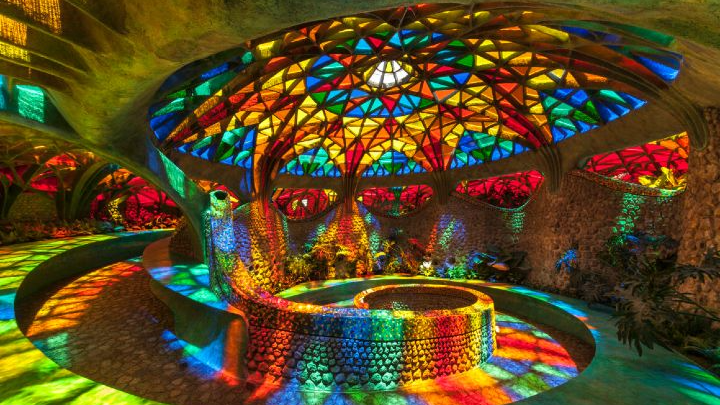
Parque Quetzalcóatl and Nido de Quetzalcóatl are often confused online, but the idea is the same: a serpent-inspired organic architectural world created by Javier Senosiain’s design language.
It feels like a place between Gaudí, fantasy cinema, and pre-Hispanic symbolism.
Can tourists visit?
Access is limited.
This is not a normal open public park where you just arrive and buy a ticket.
Some access may be possible through accommodation, private arrangements, or specific tours depending on current availability. Operators must verify before selling it.
How to get there
Private transfer from Mexico City
Pre-arranged visit or stay
Avoid selling without confirmed access
What it means for tour operators
This is not for mass tourism.
It is for:
design lovers
architects
photographers
premium private clients
unusual Mexico City extensions
When to include it
Use it when your client wants something genuinely rare.
But only if access is confirmed.
10. Playa Escondida / Playa del Amor — The Beach Inside the Earth
Where: Islas Marietas, Nayarit
Best for: marine nature, premium beach extensions, photography
Playa Escondida, also called Playa del Amor, is one of Mexico’s most famous surreal coastal images: a hidden beach inside a crater-like opening in the Marietas Islands.
It looks impossible.
A beach inside a hole in the earth.
How to get there
Access is usually by boat tour from:
Punta de Mita
Puerto Vallarta
Sayulita area
Visitors normally need authorized operators, permits, and favorable sea conditions.
Important note
Access has been restricted in the past due to overtourism and environmental pressure. Operators should always check current visitor limits and regulations.
What it means for tour operators
This is powerful for:
premium Pacific coast itineraries
honeymoon routes
nature and marine trips
photography clients
When to include it
Best as part of:
Puerto Vallarta
Riviera Nayarit
Sayulita / Punta de Mita
whale-watching season extensions
11. MUSA — The Underwater Museum Near Isla Mujeres
Where: Cancún / Isla Mujeres / Punta Nizuc
Best for: snorkeling, diving, conservation storytelling
MUSA, the Museo Subacuático de Arte, is one of the most surreal and operator-friendly experiences in the Mexican Caribbean.
Instead of another reef stop, clients snorkel or dive around submerged human figures and sculptures slowly transformed by marine life.
It is strange, beautiful, and slightly haunting.

How to get there
Access is through authorized boat operators from:
Cancún
Isla Mujeres
Punta Nizuc
Options can include:
snorkeling
scuba diving
glass-bottom boat tours
What it means for tour operators
MUSA is a smart upgrade from generic Isla Mujeres tours.
It gives you:
visual uniqueness
conservation angle
marine activity
soft adventure
strong storytelling
When to include it
Great for:
families
first-time divers
Caribbean itineraries
clients who want something different but accessible
12. Arco del Tiempo — Chiapas’ Giant Natural Portal
Where: Cintalapa / Río La Venta Canyon, Chiapas
Best for: expedition travel, adventure groups, dramatic nature
Arco del Tiempo is one of the most powerful natural places in Mexico.
A massive stone arch rises inside the Río La Venta canyon, surrounded by cliffs, river, jungle, caves, and deep wilderness energy.
It feels less like a viewpoint and more like entering a lost world.

How to get there
This is not casual tourism.
Usually:
Start from Tuxtla Gutiérrez or Cintalapa
Continue by road to the community access point
Trek and/or descend with local guides
Depending on the season, access may involve river conditions and camping-style logistics
You need local support.
What it means for tour operators
This is not for everyone.
But for the right group, it can be the highlight of an entire Mexico trip.
Ideal for:
adventure travelers
expedition groups
photography trips
premium nature clients
“Mexico beyond tourism” routes
When to include it
Use it when your product is built around adventure, not comfort.
This is a reason to sell Chiapas differently.
13. Hierve el Agua — The Frozen Waterfall That Isn’t Frozen
Where: Oaxaca
Best for: Oaxaca extensions, photography, geology, soft adventure
Hierve el Agua looks like a frozen waterfall, but it is actually a mineral formation created over thousands of years.
It sits above the valley with natural pools, dramatic views, and a landscape that feels almost staged.
How to get there
Usually by road from Oaxaca City.
Best combined with:
Mitla
mezcal palenques
Teotitlán del Valle
Tlacolula market
What it means for tour operators
Hierve el Agua is accessible, photogenic, and easy to combine with culture and mezcal.
When to include it
Perfect for:
first-time Oaxaca travelers
food and culture trips
photography tours
soft adventure days
14. Sótano de las Golondrinas — The Vertical Abyss
Where: Aquismón, San Luis Potosí
Best for: adventure, nature, Huasteca Potosina routes
Sótano de las Golondrinas is a giant vertical cave where birds spiral out in the morning and return at dusk.
It feels mythological.
A hole in the earth that breathes birds.

How to get there
Usually via:
Ciudad Valles
Aquismón
Huasteca Potosina road route
A local guide is strongly recommended.
What it means for tour operators
This is a powerful addition to a Huasteca route with:
Las Pozas
waterfalls
rivers
caves
jungle landscapes
When to include it
Best for:
adventure travelers
photographers
nature lovers
clients who enjoy early mornings and dramatic landscapes
15. Cenote Suytun — The Light Beam Cathedral
Where: Near Valladolid, Yucatán
Best for: photography, Yucatán circuits, soft adventure
Cenote Suytun became famous for its circular platform and beam of light entering from above.
Yes, it is popular.
But visually, it is still surreal.
It looks like a ritual stage.

How to get there
Easy from:
Valladolid
Chichén Itzá routes
Cancún / Riviera Maya day trips
Best early in the day before heavy crowds.
What it means for tour operators
This is useful when you want a visually strong cenote without going too remote.
When to include it
Great for:
first-time Mexico clients
photo-focused travelers
short Yucatán trips
But manage expectations: this is not hidden anymore.
How to Build a Trip Around Mexico’s Surreal Places
Do not build one giant itinerary trying to connect all of these.
Mexico is too large.
Instead, build themed routes.
Route Idea 1: Surreal Mexico City & Central Mexico
Best for design, architecture, dark tourism, and photography.
Possible route:
Mexico City
Casa Orgánica / organic architecture visit
Xochimilco
Isla de las Muñecas
Parque Quetzalcóatl access if confirmed
Hidalgo landscapes / Dunas de Pacula
This works well for:
creative groups
photographers
architects
repeat Mexico travelers
Route Idea 2: Surreal Yucatán & Riviera Maya
Best for accessible surreal nature and water-based experiences.
Possible route:
Cancún / Playa del Carmen
Río Secreto
MUSA
Valladolid
Cenote Suytun
Las Coloradas
Río Lagartos
This works well for:
first-time Mexico clients
families
soft adventure
photography-focused groups
Route Idea 3: Surreal Huasteca
Best for jungle surrealism and nature.
Possible route:
San Luis Potosí
Ciudad Valles
Xilitla / Las Pozas
Sótano de las Golondrinas
waterfalls and rivers
This works well for:
adventure travelers
small groups
premium nature clients
photographers
Route Idea 4: Northern Surreal Mexico
Best for desert, science, conservation, and otherworldly landscapes.
Possible route:
Monterrey / Saltillo
Cuatro Ciénegas
white dunes
desert pools
optional Chihuahua storytelling around Naica
This works well for:
science travel
conservation groups
photographers
mature travelers seeking something different
Route Idea 5: Chiapas Expedition Route
Best for adventure and deep nature.
Possible route:
Tuxtla Gutiérrez
Cintalapa
Arco del Tiempo
San Cristóbal de las Casas
Toniná
Palenque
This works well for:
adventure operators
expedition groups
experienced travelers
Mexico repeaters
Operator Takeaway: Surreal Places Are Not Just “Cool Stops”
The most surreal places in Mexico are not just Instagram backdrops.
Used properly, they help tour operators:
create stronger positioning
build themed itineraries
attract niche travelers
increase perceived value
move beyond generic Mexico routes
create better stories before and after the trip
But they also require responsibility.
Some places are fragile. Some are difficult to access. Some are private. Some are not open to tourists at all.
That is why operator knowledge matters.
The value is not only in knowing these places exist.
The value is knowing which ones belong in a real itinerary, which ones need careful logistics, and which ones should stay as stories rather than products.
Final Thought
Mexico does not need to invent surrealism.
It already has it.
In caves. In deserts. In jungle gardens. In pink lakes. In underwater museums. In abandoned dolls hanging from trees.
The opportunity for travel operators is not just to show these places.
It is to connect them into journeys that feel unforgettable.
Because travelers may forget another beach day.
But they will remember the moment Mexico stopped making sense.
And somehow felt more real because of it.


Comments